Boat & RV Storage
Canopy, covered, and fully enclosed boat and RV storage buildings sized for the rigs your tenants drive.
Big doors, tall clearance
Boat and RV storage demands different engineering than standard self-storage. Taller eave heights, wider door clearances, reinforced foundations, and drive-through access patterns require a builder who understands the specific structural and operational requirements.
We build canopy, covered, and fully enclosed boat and RV storage, from open-air steel canopies to climate-controlled enclosed buildings with oversized roll-up doors. Every project is designed for the vehicles your tenants actually drive.
Boat and RV storage built for the rigs in your market
Wasatch designs and builds boat storage, RV storage, and combined boat and RV storage facilities for owners, operators, and developers across the country. The right configuration is set by the rigs your trade area actually parks: Class A motorhomes, fifth wheels, travel trailers, ski boats, wake boats, side-by-sides, snowmobiles, and the trailers that move them. Eave height, drive aisle width, door clearance, and circulation pattern all flow from the rig profile, the unit mix, and the operating model.
Three building types make up the catalog. Open canopy boat and RV storage is the lowest cost per square foot and the fastest to revenue, with three-sided steel canopies sheltering the rig from sun and snow. Covered storage adds end walls and partial enclosure for tenants who want more protection at a modest premium. Fully enclosed boat and RV storage units are the premium tier: individually-walled units with oversized roll-up doors, optional climate control, lighting, and security per unit. Most facilities mix two or three of these to capture demand across the rent ladder.
Boat and RV storage facilities tend to outperform conventional self storage on tenant tenure. Typical rental terms in this segment run roughly two years versus eight to twelve months for standard self storage. The longer hold improves NOI stability and lowers churn cost, but only when the building was sized correctly at the start. Wrong door clearance, tight drive aisles, or skinny turn radii reduce the addressable tenant pool and erode that advantage.
A complete boat and RV storage business depends on the building, the site, and the operations stack lining up. Wasatch can design and build the building, advise on site layout, sequence the construction with sitework and utilities, and hand off a finished facility ready for the management company. Most projects use a pre-engineered steel building system for the cost certainty and the speed.
One team handles design, engineering, fabrication, and construction. One contract, one schedule, one number you can hold us to.
Tall Eave Heights
14-foot to 18-foot eave heights accommodate Class A motorhomes, fifth wheels, and sailboats without clearance issues.
Wide Door Clearances
Oversized roll-up doors and drive-through configurations let tenants pull in without the stress of tight turns.
Canopy & Covered Options
Steel canopy structures provide weather protection at a lower cost per square foot than fully enclosed buildings.
Enclosed Premium Units
Fully enclosed buildings with insulation, lighting, and individual unit security for premium rental rates.
Reinforced Foundations
Engineered for the weight of loaded RVs and boats. No settling, no cracking, no callbacks.
Operational Layout
Wide drive aisles, pull-through access, and logical traffic flow designed for large vehicles.
Boat and RV storage building specs
Wasatch boat and RV storage facilities are pre-engineered to the snow, wind, and seismic loads of the specific jurisdiction. The ranges below cover open canopy, covered, and fully enclosed boat and RV storage units.
- Eave heights
- 14' to 18' (oversized RV builds to 20')
- Bay widths
- Up to 20' per bay
- Door clearance
- Up to 14' tall, custom widths to fit fifth wheels and Class A motorhomes
- Drive aisle width
- 30' to 60' depending on pull-through vs back-in
- Standard building widths
- 20' to 70' (custom available)
- Ground snow load
- 10–110 lb/sf
- Wind load
- 70–150 mph
- Seismic design category
- Engineered to local code
- Foundation
- Reinforced slab on grade, engineered for loaded RV and trailer weights
- Frame
- Galvanized structural steel, pre-engineered to span and load
- Exterior wall panels
- 26-gauge A-panel
- Roof panels
- 24-gauge standing seam or 26-gauge R-panel
- Trim
- 26-gauge prefinished
- Canopy roof pitch
- 1/2:12 to 6:12 gable or shed style
- Standard storage door
- 9' to 12' wide, 2'8" to 12' tall
- Mid-size boat/RV door
- 8' to 14' wide, 8' to 16' tall
- Oversize RV door
- 10' to 18' wide, 8' to 18' tall
- Door operation
- Manual standard; motor operator with key/keypad/Bluetooth optional
Finishes and the long-term picture
Every Wasatch boat and RV storage building uses baked-on coatings on wall panels, roof panels, trim, and doors, built to resist peeling, flaking, and fade, over Galvalume-coated steel that stands up to weather and time far better than bare steel.
Standard wall and roof colors run the neutral spectrum that performs against weather and time: Ash Gray, Iced White, Cream Beige, Light Stone, Slate Gray, Silhouette Gray. Door and trim palettes carry the full storage-industry color set, including high-visibility branding accents (Patriot Red, UB Yellow, Wasabi Green, Royal Blue) when the facility wants a strong street presence. Enclosed boat storage units default to insulated wall and roof panels for thermal stability; canopy structures use single-skin construction for the lower cost basis.
Foundations are engineered for the actual point loads of a loaded Class A motorhome, fifth wheel, or sailboat trailer, not standard storage live loads. That matters at year five and year ten when conventional slabs in cheaper boat and RV storage facilities start cracking under the static weight of stored rigs. Asphalt drive aisles, concrete aprons at door bays, and proper crowning for water management are all detailed on the construction documents.
Solar-ready framing is available on canopy and enclosed boat and RV storage buildings as a standard option. Adding a solar array later requires only the panel installation and tie-in, with the structural and conduit work already in place.
How a boat and RV storage project moves
From the first call about a parcel through certificate of occupancy, every Wasatch boat and RV storage project follows the same five stages. The estimator who prices the bid handles the change orders. The PM who runs the schedule walks the punch list.
- 01
Trade-area read
Rig profile (boats vs RVs vs trailers vs mixed), competing facility inventory, target rent per linear foot, and absorption assumptions get pressure-tested before any design work. If the numbers do not pencil at supportable rents, that gets called out up front.
- 02
Building concept and bid
Wasatch returns a building footprint, unit mix across canopy / covered / enclosed, drive aisle layout, and budget range in days. The bid is line-itemed by category so it can be compared apples to apples against any competing boat and RV storage construction quote.
- 03
Design and engineering
Stamped construction documents engineered to the actual snow, wind, and seismic loads of the jurisdiction. Door schedules, slab design, drainage, and electrical handed to civil and architectural partners.
- 04
Fabrication and procurement
Steel package, doors, panels, trim, and long-lead items released to fabrication. Delivery windows coordinated against site work so erection starts on the agreed date.
- 05
Erection and turnover
Foundations, slab, and sitework run in parallel with steel fabrication. Erection follows a known cadence. Closeout includes O&M manuals and a real punch walk before keys turn over to the management company.
Questions
14-foot eave heights cover most travel trailers, fifth wheels, and Class C motorhomes. 16-foot eaves cover Class A motorhomes and most boats with arches. 18-foot eaves cover sailboats with masts down and tall fifth wheels with rooftop AC. Door clearances should be 12 feet wide minimum for boat trailers and 14 feet for Class A access.
Canopy (open-air with a roof) is the lowest cost per square foot and rents at the lowest rate. Covered (three walls plus roof) rents at a 25% to 40% premium. Fully enclosed with a roll-up door rents at a 60% to 100% premium and supports climate-controlled add-ons. Most successful facilities run a mix to address the full demand curve.
60-foot minimum for drive-through layouts with Class A motorhomes. 70-foot is more comfortable. Pull-in/back-out layouts can work at 50 feet but reduce rental velocity because tenants struggle with maneuvering large rigs.
Yes. A loaded Class A motorhome can exceed 30,000 pounds and concentrates load on a small contact patch. Standard self-storage slab specs are not adequate. We design slabs for the actual gross vehicle weights tenants will park, including snow load if applicable.
Open-air canopy boat storage facilities run $18 to $35 per rentable square foot. Three-sided covered structures land in the $30 to $55 range. Fully enclosed buildings run $40 to $75 per rentable square foot, more for climate-controlled. Boat trailer storage with smaller doors and shorter eaves comes in at the lower end of the canopy range.
RV boat storage uses taller eave heights (14 to 18 feet vs. the standard 8), wider doors (12 to 14 feet vs. 8 to 10), reinforced foundations engineered for vehicle loads, and wider drive aisles for maneuvering. The structural and operational profile is closer to a commercial vehicle storage facility than a self-storage building. Treat it as a different product, not a variant.
Boat and RV storage typically uses commercial-grade insulated steel roll-up doors at 12 to 14 feet wide and 14 to 16 feet tall. We spec doors based on the largest vehicle the unit needs to accept (a Class A motorhome with rooftop AC needs taller clearance than a fifth wheel) plus a buffer for tenant maneuvering. Insulated doors are standard on enclosed buildings; canopies use open-bay configurations without doors.
Standard self-storage roll-up doors are manual chain-hoist or torsion-spring units, sized 8 to 10 feet wide. Boat and RV storage uses larger commercial roll-up doors, often with electric operators because the door size makes manual operation impractical. Operators integrate with gate access systems so tenants can open their unit from the same fob or app that opens the facility gate.
A quality commercial roll-up door installed correctly should run 20 to 30 years before major service. The wear items are the springs, weather seals, and (on motorized doors) the operator and chain. Annual inspection of the spring tension and seal condition extends life and avoids the most common failure mode, which is a spring break that drops the door curtain.
Boat & RV projects
Tremonton Storage
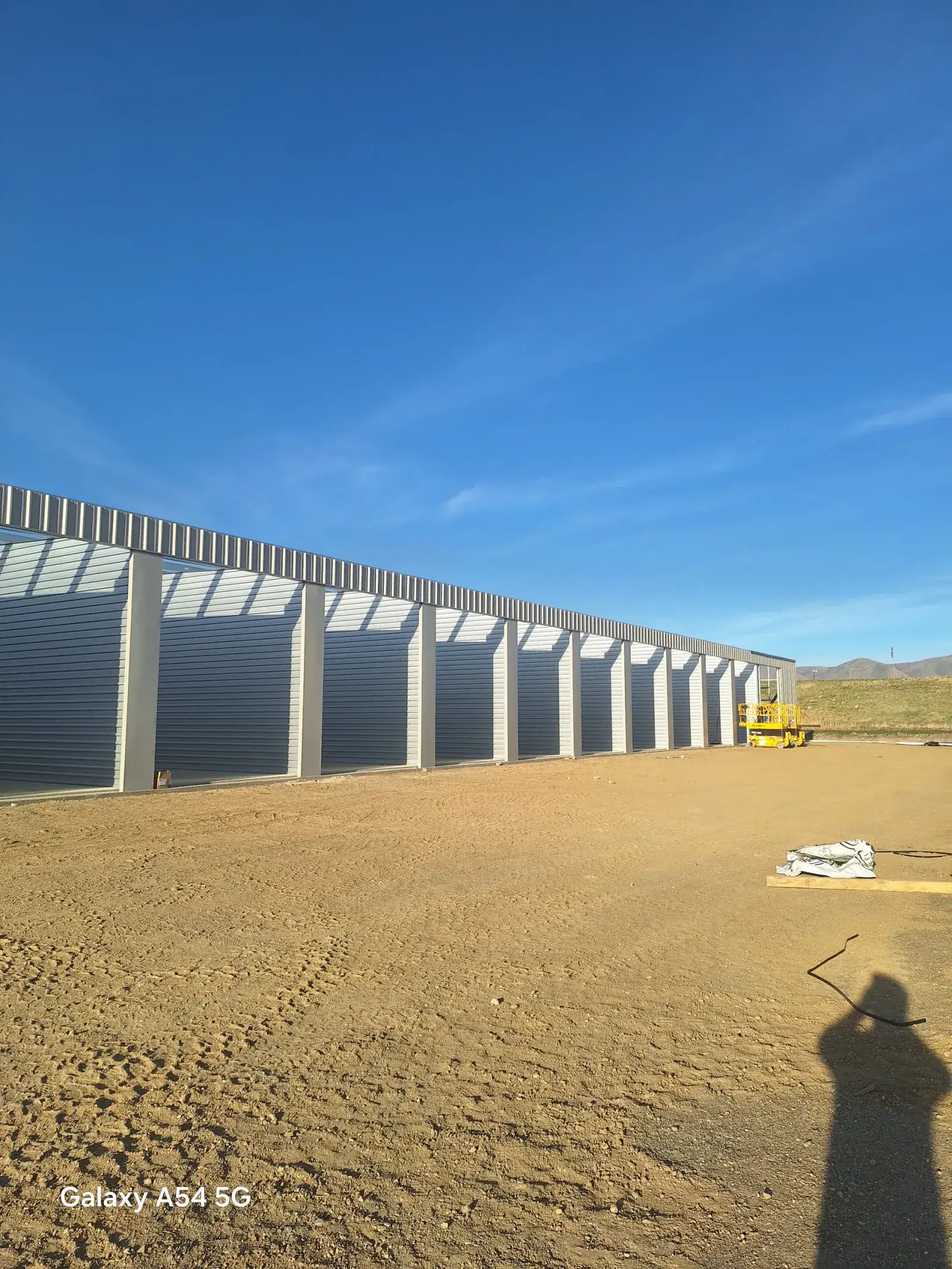
Built for the way this market lives. Outdoor recreation storage in Tremonton, Utah, purpose-built for boats, side-by-sides, trailers, and oversized equipment at the foot of the Wellsville Mountains.
View project→Point of the Mountain Storage
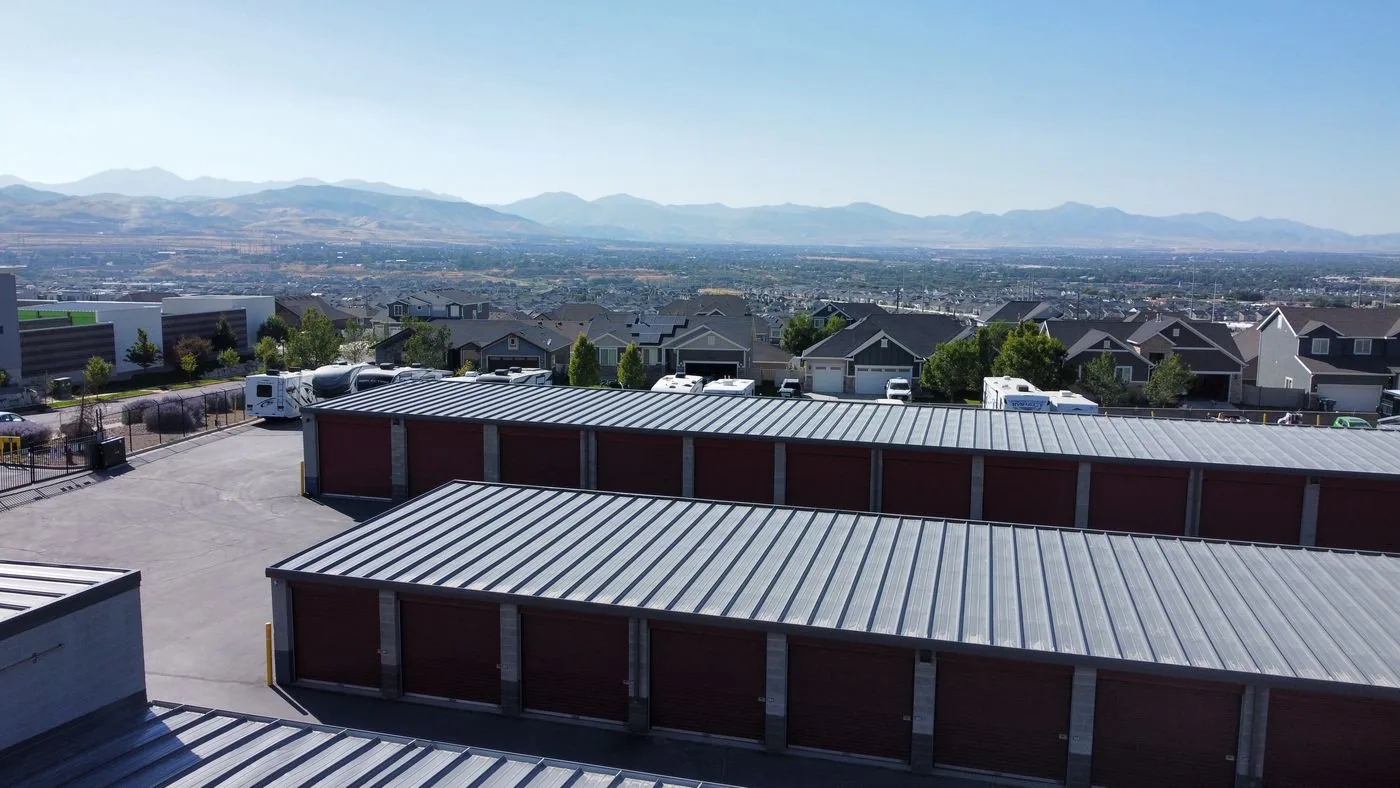
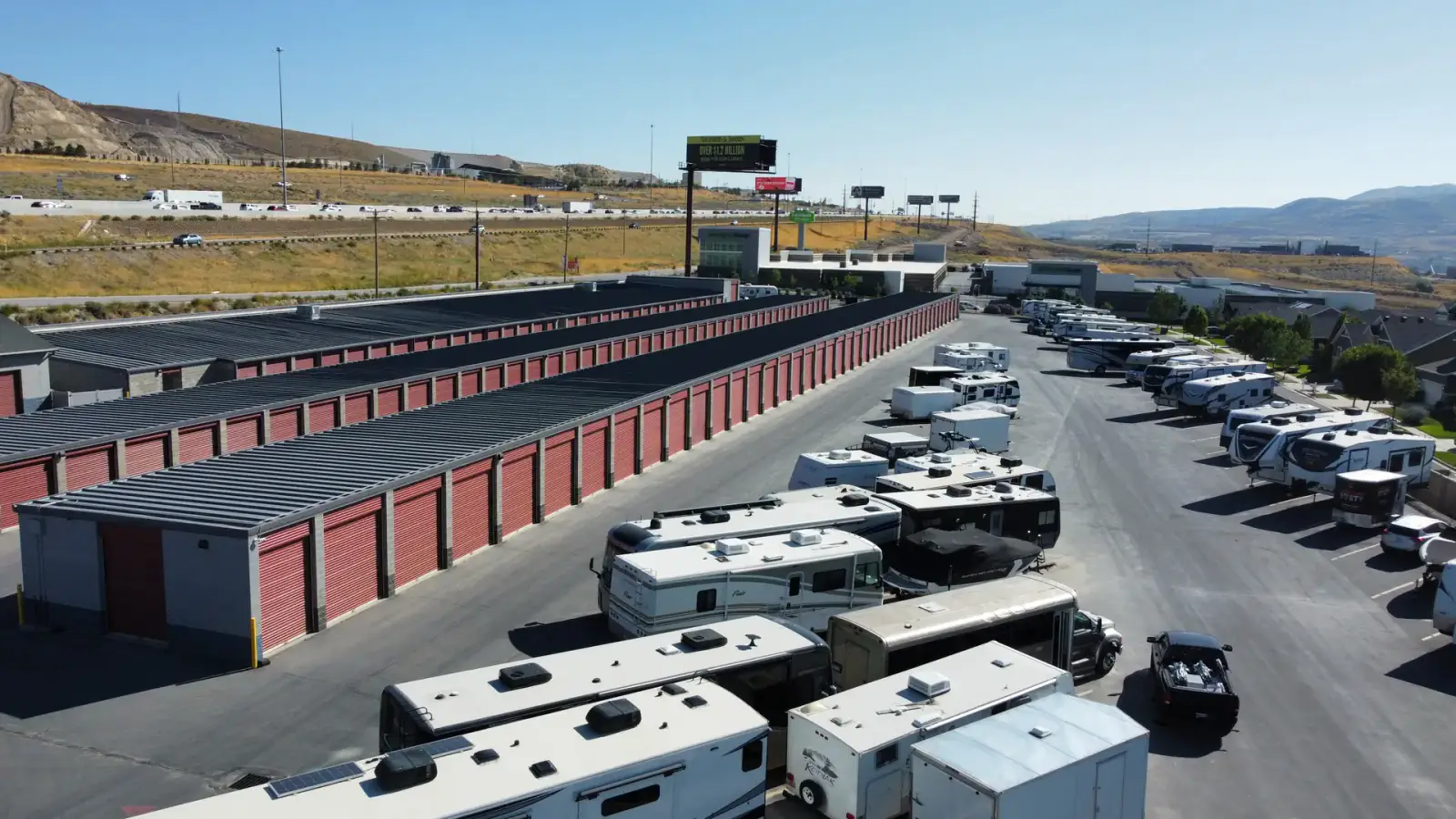
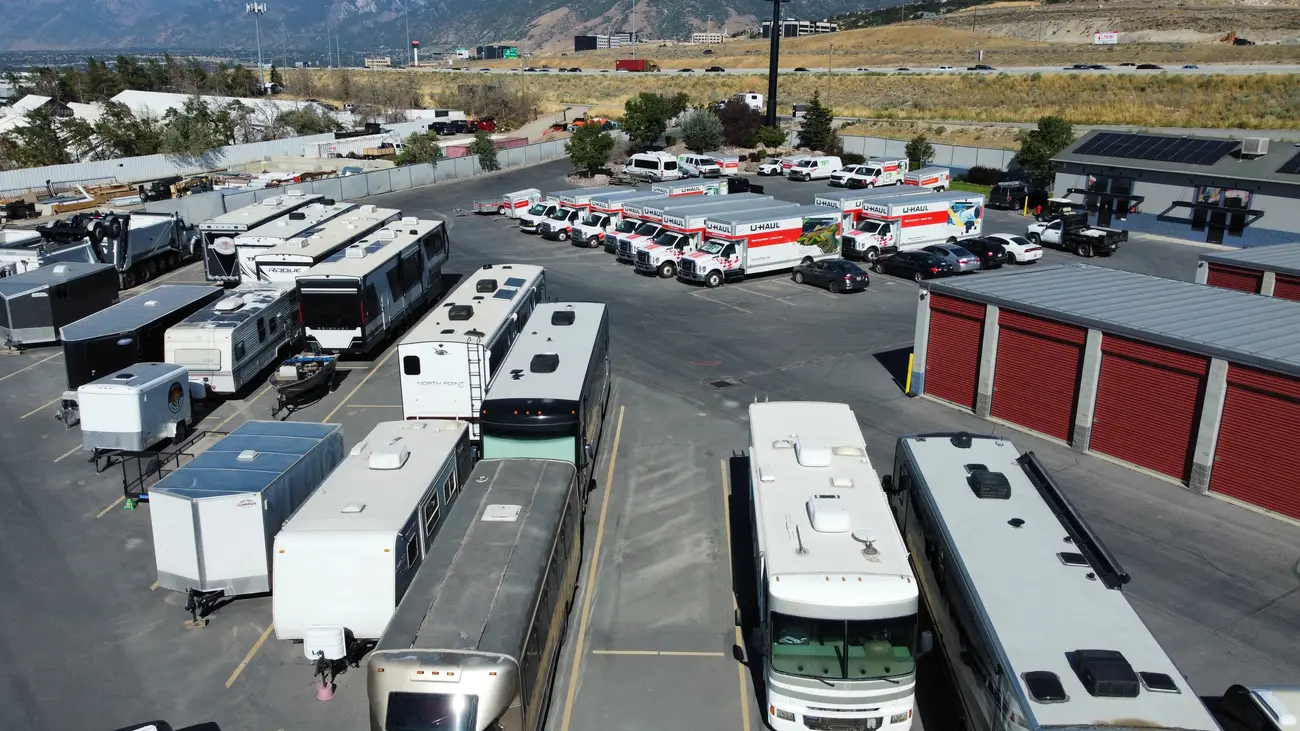
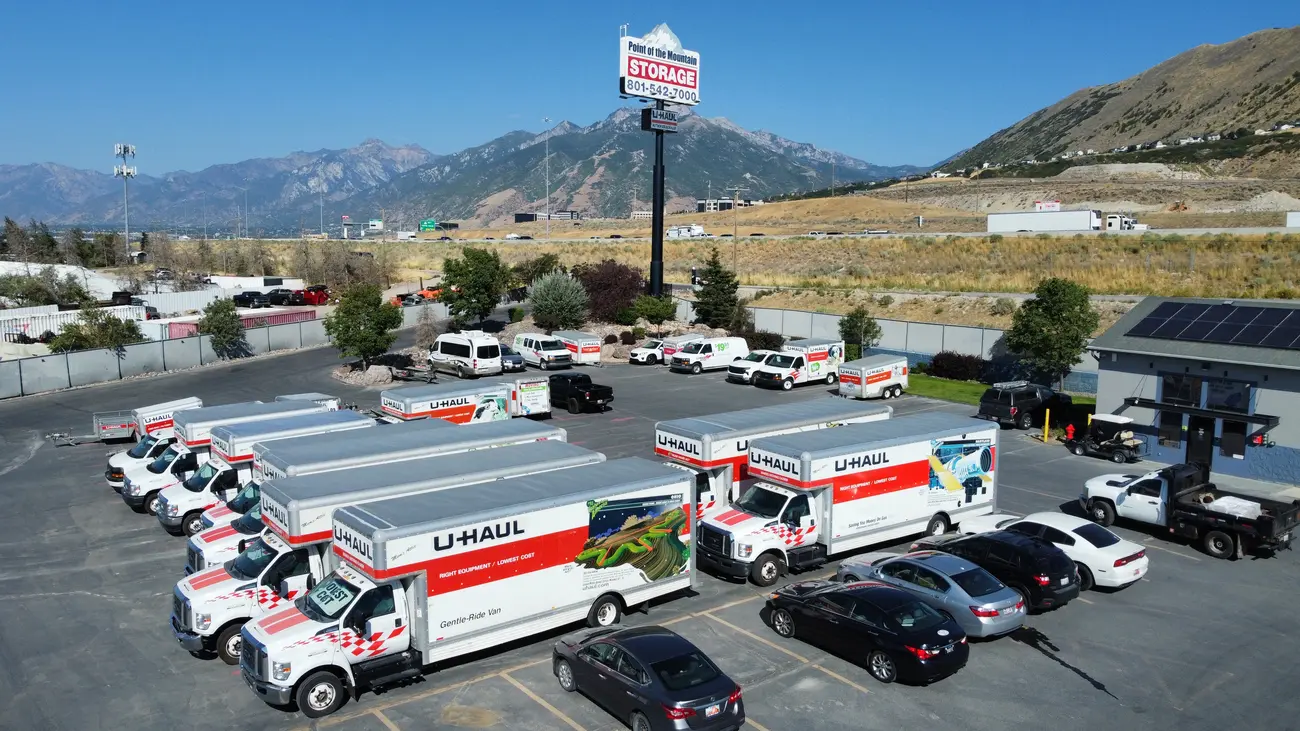
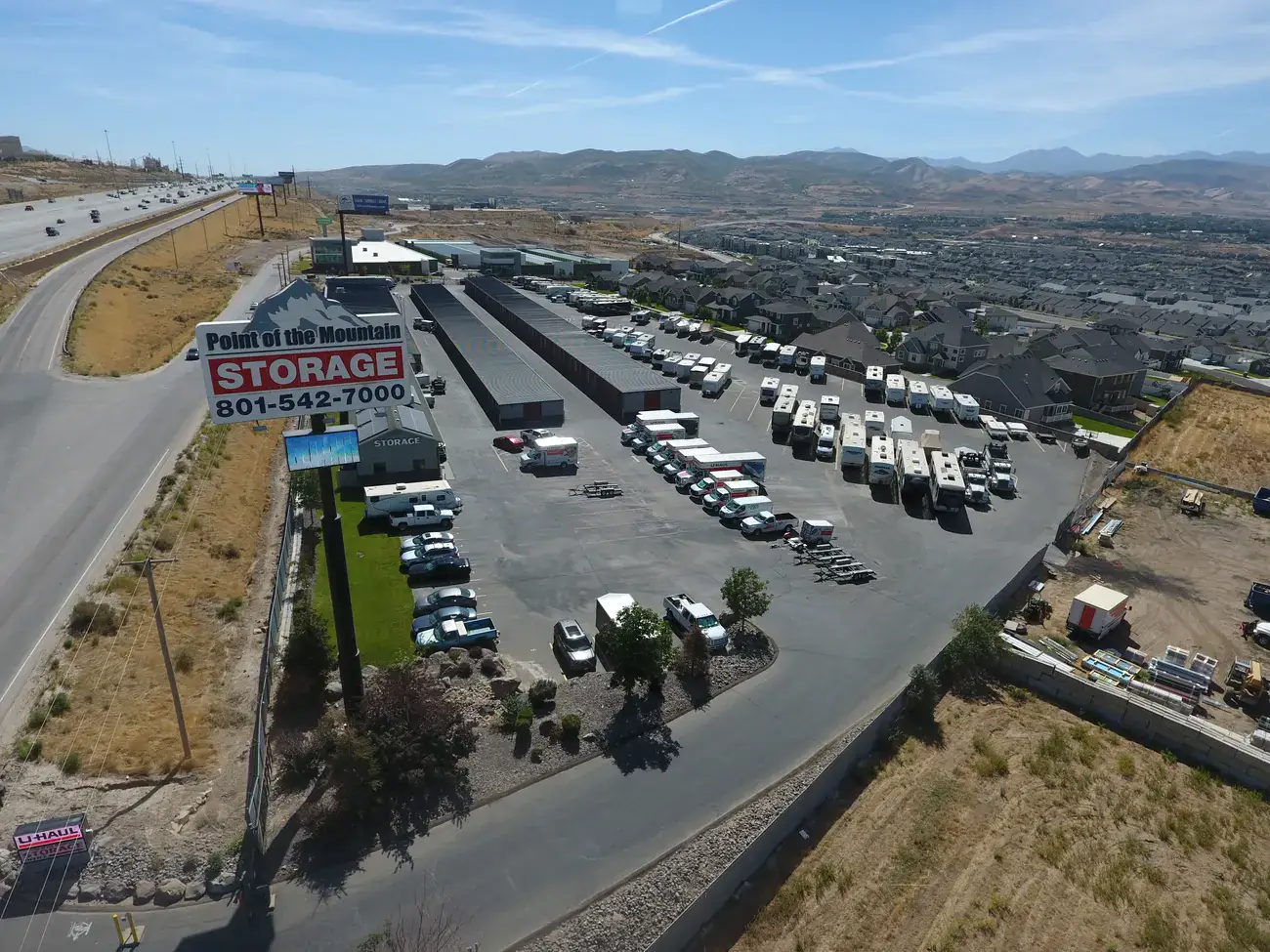
Self-storage and RV storage facility at the Point of the Mountain in Bluffdale. Features drive-up units, oversized RV parking, and mountain views from every angle. Multi-building metal construction with U-Haul partnership.
View project→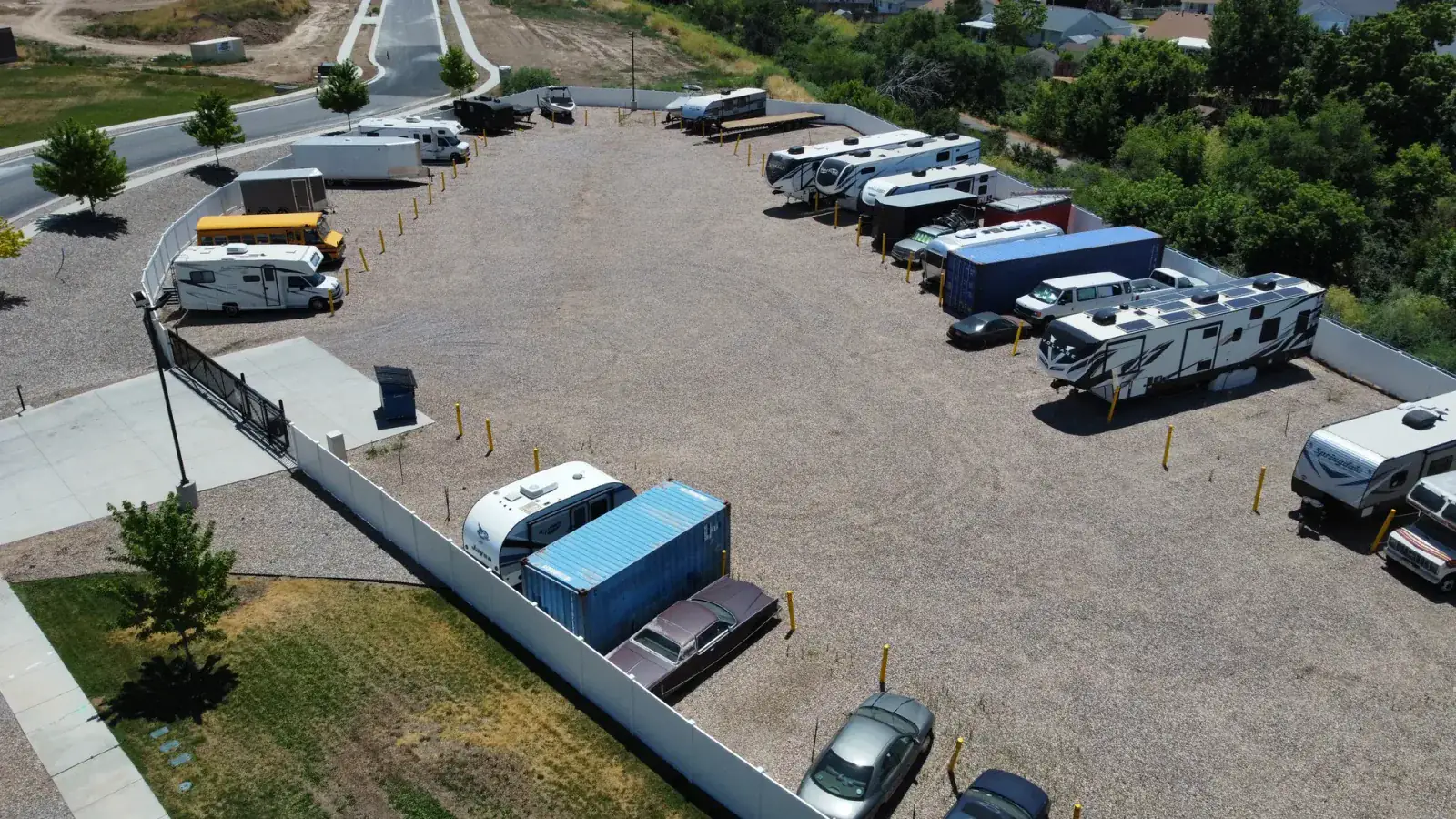
Layton Crossing Boat & RV
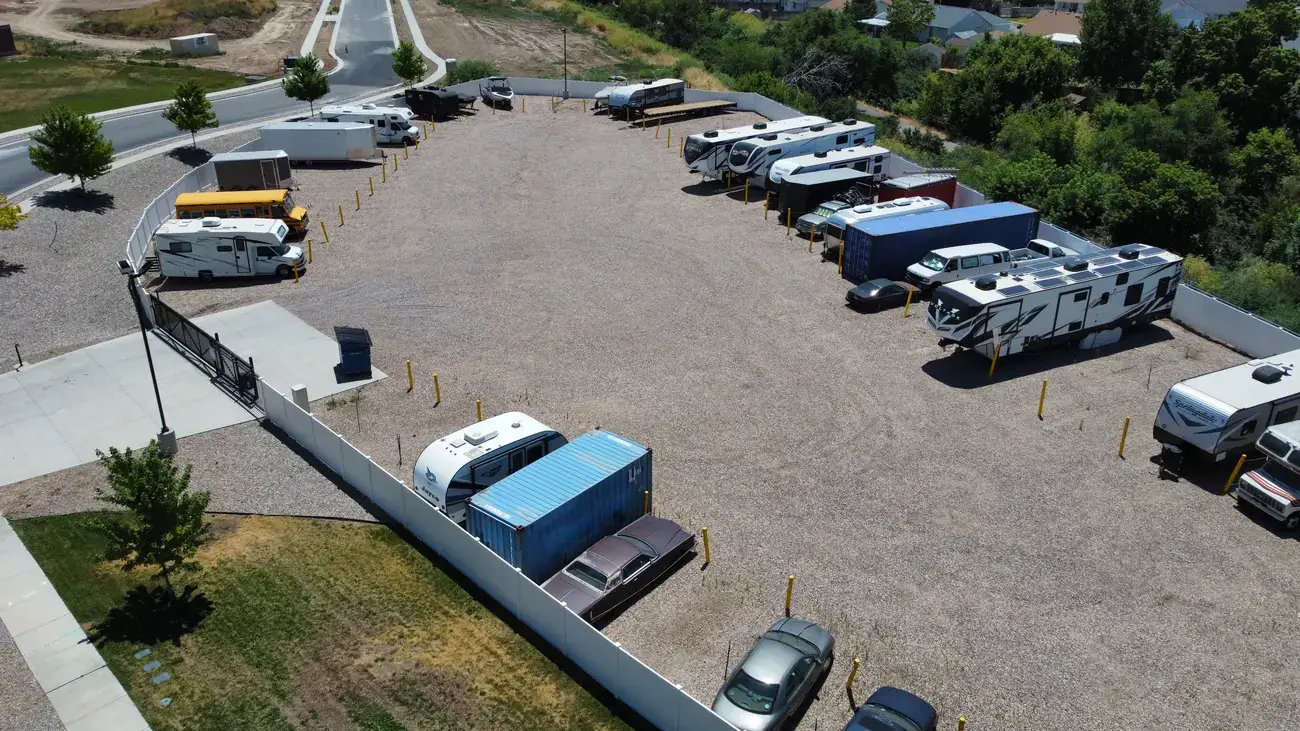
Purpose-built boat and RV storage along one of Utah's fastest-growing corridors. Oversized drive aisles, fenced perimeter, and high-clearance gravel surface designed for real-world rigs, not showroom floors.
View project→