Layton Crossing Boat & RV
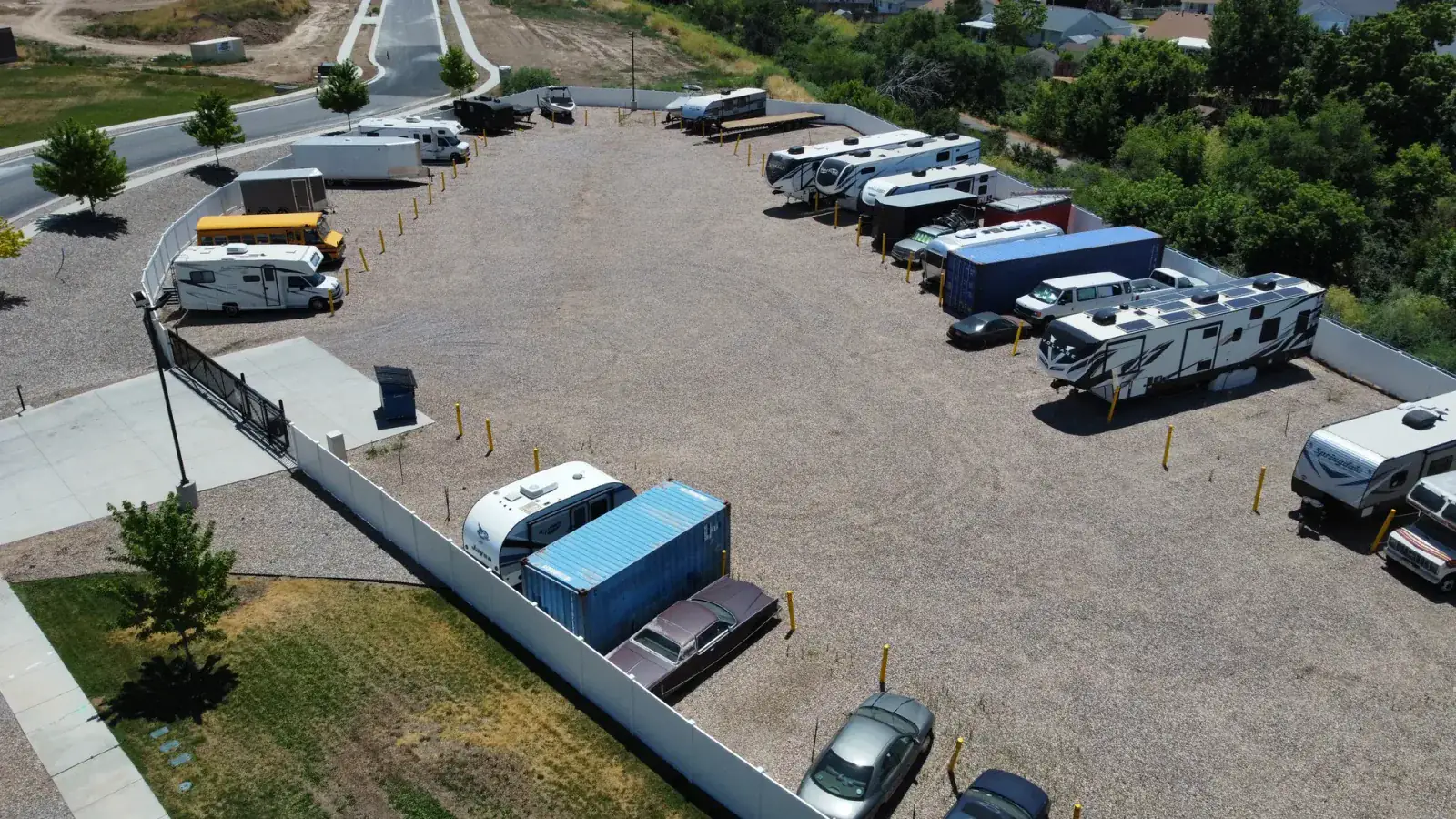
Purpose-built boat and RV storage along one of Utah's fastest-growing corridors. Oversized drive aisles, fenced perimeter, and high-clearance gravel surface designed for real-world rigs, not showroom floors.
Layton Crossing is a boat and RV storage facility built for how the Wasatch Front actually plays.
Located along one of Utah's fastest-growing corridors, Layton serves a market where households are younger, lot sizes are tighter, and toys, boats, RVs, trailers, side-by-sides, are no longer optional. They're part of the lifestyle. The trade area runs from Centerville through Kaysville, Syracuse, and West Point, and the demographic that drives Davis County growth also drives every conventional self-storage facility within ten miles to a wait list for oversize units.
Layton, UT · View map→The problem is simple. HOA restrictions, narrow driveways, and code limits mean the average owner has nowhere to keep them. That's the gap Layton Crossing was designed to fill. Boat storage and RV storage in Davis County had not kept pace with the residential growth curve, and the facilities that did exist were converted self-storage with marginal door clearance and tight turn radii, not buildings designed from the ground up for the rigs the market actually drives.
Built for the vehicle, not the average self-storage unit. Oversized drive aisles engineered for back-in and pull-through access by Class A motorhomes, fifth wheels, and full-length boat trailers. Fenced perimeter with controlled gate entry for round-the-clock peace of mind. Gravel surface and high clearance for real-world rigs, not showroom floors. Proximity to I-15 that turns "where do I park it" into "on the way to the lake."
The Wasatch boat and RV storage package on Layton Crossing was designed around the Bear Lake / Pineview / Causey traffic pattern that the Davis County RV and boat tenant base follows in summer. Drive aisles wide enough to back a 35-foot fifth wheel without a spotter. Pull-through positions on the perimeter for the customers who detach and reattach trailers in the same trip. Operating layout chosen so that two large rigs can pass in the main drive aisle without one having to wait.
The math works because the market is underbuilt. Traditional self-storage keeps scaling in Layton, but purpose-built RV and boat storage capacity has not kept pace with demand. That imbalance is where long-term lease-up lives. Average tenant tenure in boat and RV storage typically runs roughly two years versus eight to twelve months for conventional self-storage, which turns Layton Crossing's NOI into a smoother, more predictable number than most facilities in the comp set.
At Wasatch Structures, projects like Layton Crossing are not afterthoughts. They are operational assets, designed for a customer base that returns every weekend, year after year, and stays under contract for the life of the rig they came in with.
- 01Dedicated boat & RV storage
- 02Oversized pull-through aisles
- 03Fenced perimeter, controlled entry
- 04High-clearance gravel surface
- 05I-15 corridor access
- 06Davis County growth market