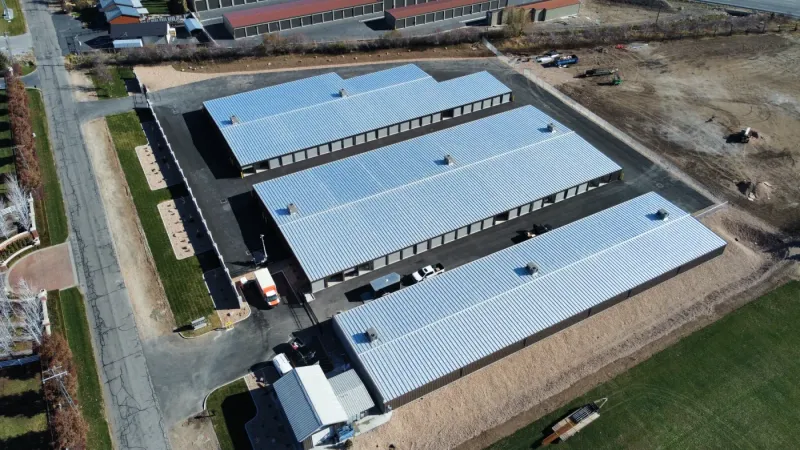
Self-Storage
Single-story, multi-story, and climate-controlled facilities. One team from site planning through certificate of occupancy.
Designed for the pro forma
Every self-storage project starts with the numbers. We design and build facilities that maximize rentable square footage per dollar spent, optimizing unit mix, hallway widths, and building footprint to hit your target returns.
From single-story drive-up facilities to multi-story climate-controlled buildings, our design-build approach gives you one team from site planning through certificate of occupancy. No miscommunication between architect, engineer, and builder. One point of accountability.
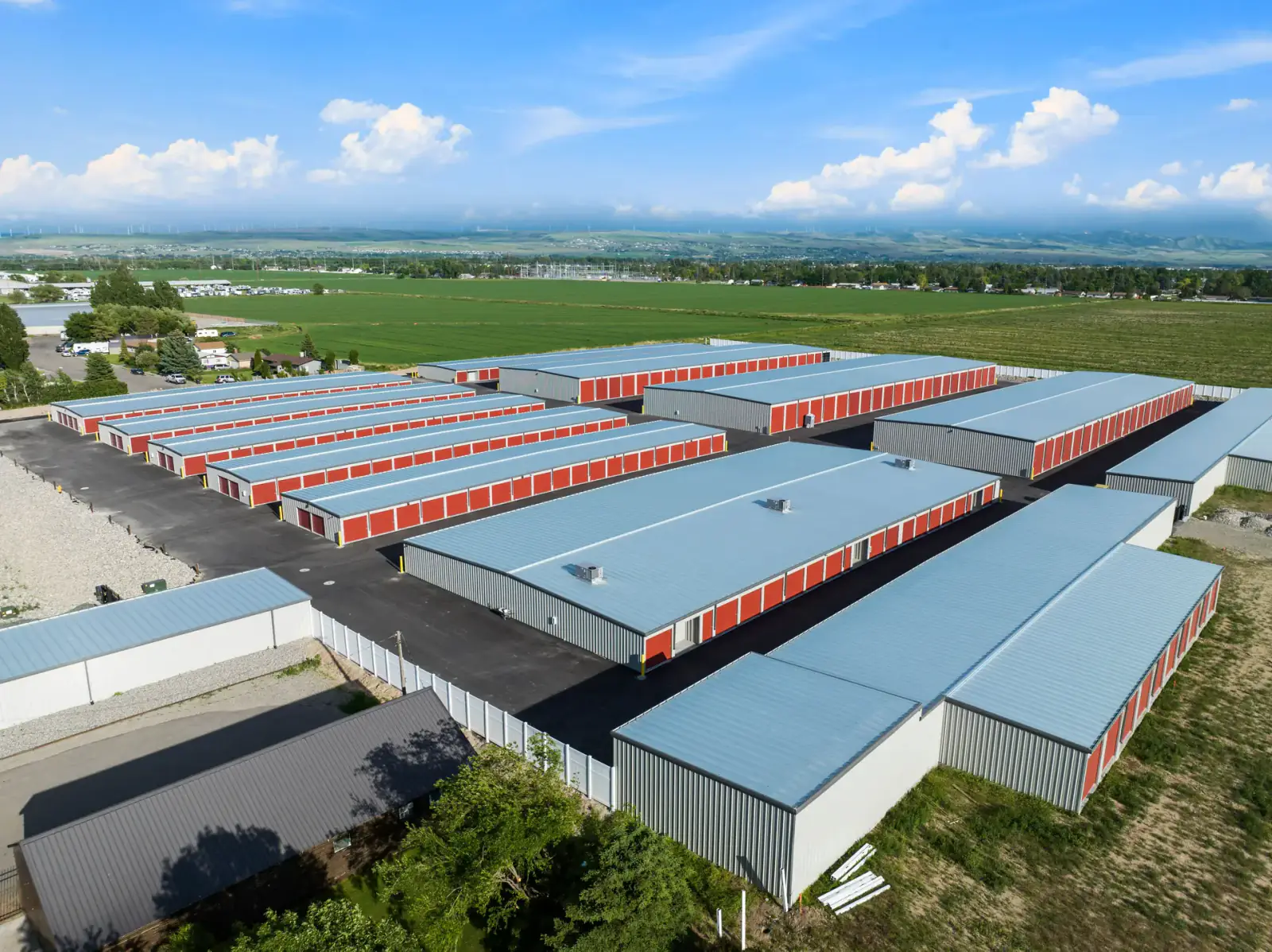
Your self-storage building contractor, start to finish
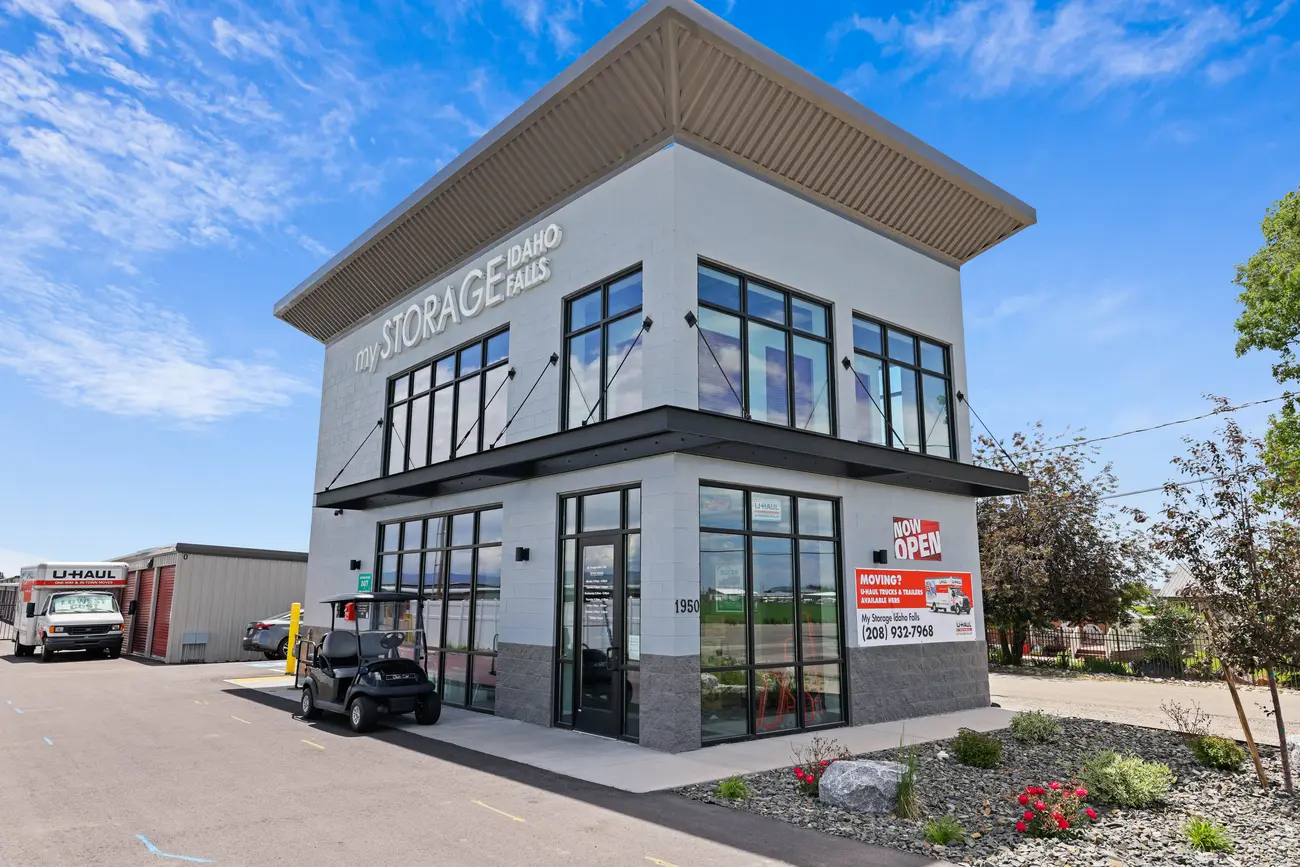
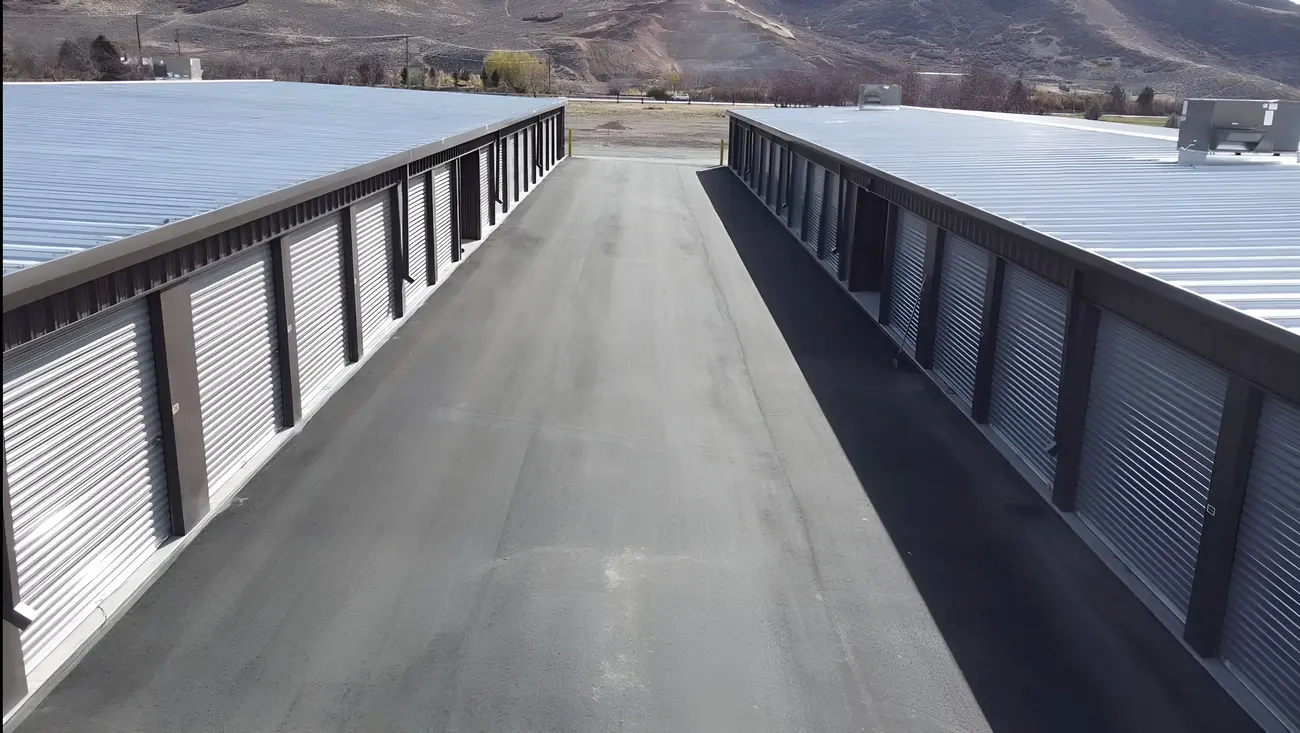
As a self-storage facility construction contractor, Wasatch designs, engineers, fabricates, and erects self-storage in three primary formats: single-story drive-up, multi-story interior-corridor, and climate-controlled. Most projects mix two of the three. The right combination is set by land cost, market rent, demand mix, and what the trade area is short on, not by a template.
Every project gets a pre-engineered steel building system spec’d to the snow, wind, seismic, and live loads of the jurisdiction. Frames, secondary steel, panels, trim, and roll-up doors are fabricated in a controlled environment and delivered ready to assemble. Site work, foundations, MEP, and finishes are coordinated through trusted subs, with a Wasatch superintendent on-site for the duration.
Unit mixes are worked back from the SLC, Boise, Phoenix, or local-market rent comps, not pulled from a vendor catalog. Hallway widths, eave heights, door sizes, and circulation are spec’d to the floorplan the building can actually rent.
One team handles design, engineering, fabrication, and construction. One contract, one schedule, one number you can hold us to.
Optimized Unit Mix
Right-sized units based on market demand analysis, not guesswork. Maximize revenue per square foot with the right balance of 5x5 through 10x30.
Clear-Span Construction
Pre-engineered steel frames eliminate interior columns, giving you maximum flexibility for unit layout and future reconfiguration.
Climate-Controlled Options
Insulated panels, HVAC integration, and interior hallway designs that command premium rental rates in your market.
Fast Track Timelines
Factory-fabricated steel components arrive ready for erection. Predictable schedules keep your pro forma on track for lease-up.
Site Efficiency
Building footprints, drive aisles, and access points designed to maximize rentable area on your specific parcel.
Pro Forma Alignment
Every design decision is evaluated against your financial model. We flag cost creep before it impacts returns.
Standard build envelope
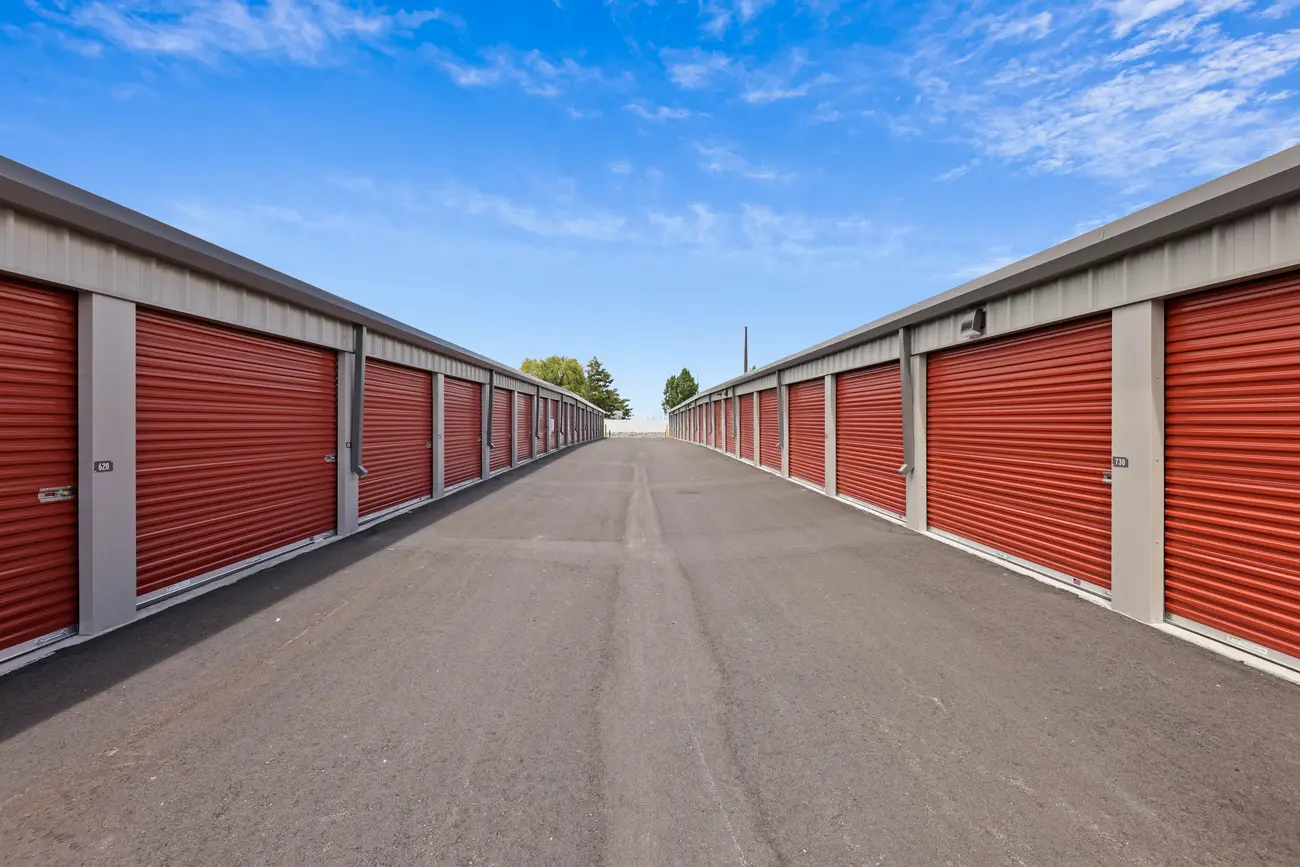
Wasatch self-storage systems are engineered to the snow, wind, and seismic loads of the specific jurisdiction. The ranges below cover the standard package across single-story drive-up, multi-story, and climate-controlled formats.
- Ground snow load
- 10–110 lb/sf
- Wind load
- 70–150 mph
- Floor live load (multi-story)
- 125 psf
- Seismic design category
- Engineered to local code
- Standard widths
- 20'–200' in 5' increments
- Bay widths
- 5', 8', 10', 11', 12', 15', 20'
- Eave heights (single-story)
- 8'4" – 16'4"
- Eave heights (multi-story)
- 17'–42' (2–4 stories)
- Roof pitch
- 1/4:12 to 8:12 gable or single slope
- Exterior wall panels
- 26-gauge A-panel
- Roof panels
- 24-gauge standing seam or 26-gauge R-panel
- Interior partition panels
- 29-gauge R-panel galvalume
- Door frame openings
- 18-gauge prefinished G-90 galvanized
- Rake and eave trim
- 26-gauge
- Standard drive-up door
- 9' wide on 10' bays, 11' wide on 12' bays
- Door rating (9' wide)
- Up to 130 mph wind
- Door spring
- EP3 corrosion-proof
- Door operation
- Manual standard, motor operator optional (ADA-compliant)
Materials and finishes that last
Wall panels, roof panels, trim, and doors are finished in baked-on coatings built to resist peeling, flaking, and fade, over Galvalume-coated steel that stands up to sun, snow, and corrosion far better than bare steel.
Standard wall colors run the neutral spectrum (Ash Gray, Iced White, Cream Beige, Light Stone, Slate Gray, Silhouette Gray). Door and trim palettes carry the full storage-industry color set, from facility-branding accents (Patriot Red, UB Yellow, Wasabi Green, Royal Blue) through neutral options (Bright White, Continental Brown, Burnished Slate, Matte Black, Galvalume). The full chart lives on the Resources page, with an interactive simulator that recolors a real building.
Continuous roof sheeting up to 65 feet wide is standard on shallow-pitch single-story builds, eliminating ridge caps and minimizing roof penetrations. For higher-pitched roofs (up to 8:12), Wasatch builds with standing seam or R-panel finishes as the design calls for.
How a project moves
From first call to certificate of occupancy, every project follows the same five stages. The estimator who prices the bid is the same one who handles change orders. The PM who runs the schedule is the same one who walks the punch list.
- 01
Site and feasibility
Land status, zoning, target unit count, and pro forma assumptions get pressure-tested before any design work begins. If the deal doesn’t pencil at the rent the market actually supports, that gets said up front.
- 02
Concept and bid
Wasatch returns a building footprint, unit mix, and budget range in days. The bid is line-itemed by category so an owner can compare apples to apples against any competing quote.
- 03
Design and engineering
Stamped construction documents in the jurisdiction, engineered to the actual snow, wind, and seismic loads. Permit-ready drawings handed to civil and architectural partners (yours or ours).
- 04
Fabrication and procurement
Steel package, doors, panels, trim, and long-lead items released to fabrication. Trucking and delivery windows coordinated against the site schedule so the field isn’t waiting on material.
- 05
Erection and turnover
Foundations, slab, and sitework run in parallel with steel fabrication. Erection follows a known cadence. Closeout includes O&M manuals and a real punch walk.
Questions
Single-story drive-up: $30 to $55 per rentable square foot. Multi-story interior corridor: $65 to $110 per rentable square foot. Climate-controlled adds $15 to $30 per rentable square foot. These ranges are for the building only and exclude land, site work, soft costs, and FF&E.
Land cost is the deciding factor. When land is under roughly $8 per square foot, single-story drive-up usually wins on dollars-per-NRSF and operates more simply. When land is above that, multi-story produces more rentable square footage on the same parcel and the higher build cost per square foot is offset by the larger NRSF base. The breakpoint moves with construction cost inflation, climate, and unit-mix demand in your specific market.
Mix is market-driven. A typical balanced mix is roughly 30% small (5x5 to 5x10), 40% medium (10x10 to 10x15), 25% large (10x20 to 10x30), and 5% climate-controlled or specialty. The actual right mix comes from a feasibility study of competing facilities within a 3 to 5 mile radius and the demand curve of your trade area.
Site fit depends on traffic count and visibility (15,000+ AADT preferred), a 3-mile trade-area population that can absorb the new NRSF, zoning that permits storage as either permitted or conditional use, utilities at the lot line, and a parcel shape that accepts efficient drive-aisle geometry. See our Self-Storage Feasibility Checklist for the full pre-purchase due diligence list.
Climate-controlled commands a 30% to 50% rental rate premium in most markets and is closer to required than optional in hot, humid, or freeze-prone climates. In moderate climates, a 15% to 25% climate-controlled mix often optimizes revenue per square foot without overspending on HVAC capacity for units that would rent at standard rates anyway.
Self-Storage projects
My Storage Charleston
Purpose-built self-storage in a high-demand Charleston corridor. 18-wheeler accessibility, on-site truck rentals, oversized doors, and a diverse unit mix designed for customers in transition, not just where they store.
View project→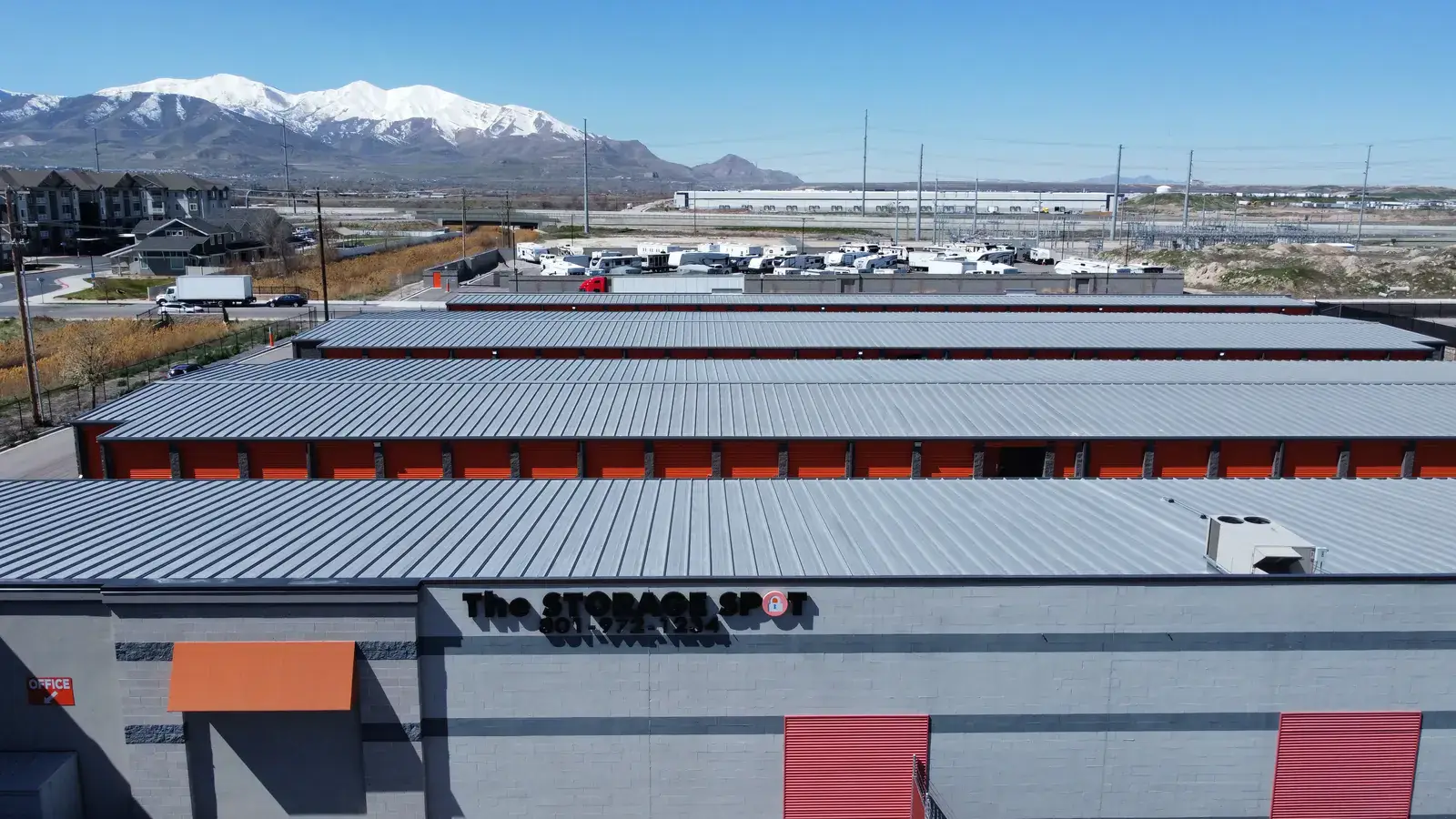
The Storage Spot
A large-format steel self-storage facility in West Valley City, Utah, designed and built by Wasatch Structures. Multi-building drive-up and climate-controlled metal buildings with boat and RV parking, engineered and erected for a dense Salt Lake Valley market under one design-build self-storage construction contract.
View project→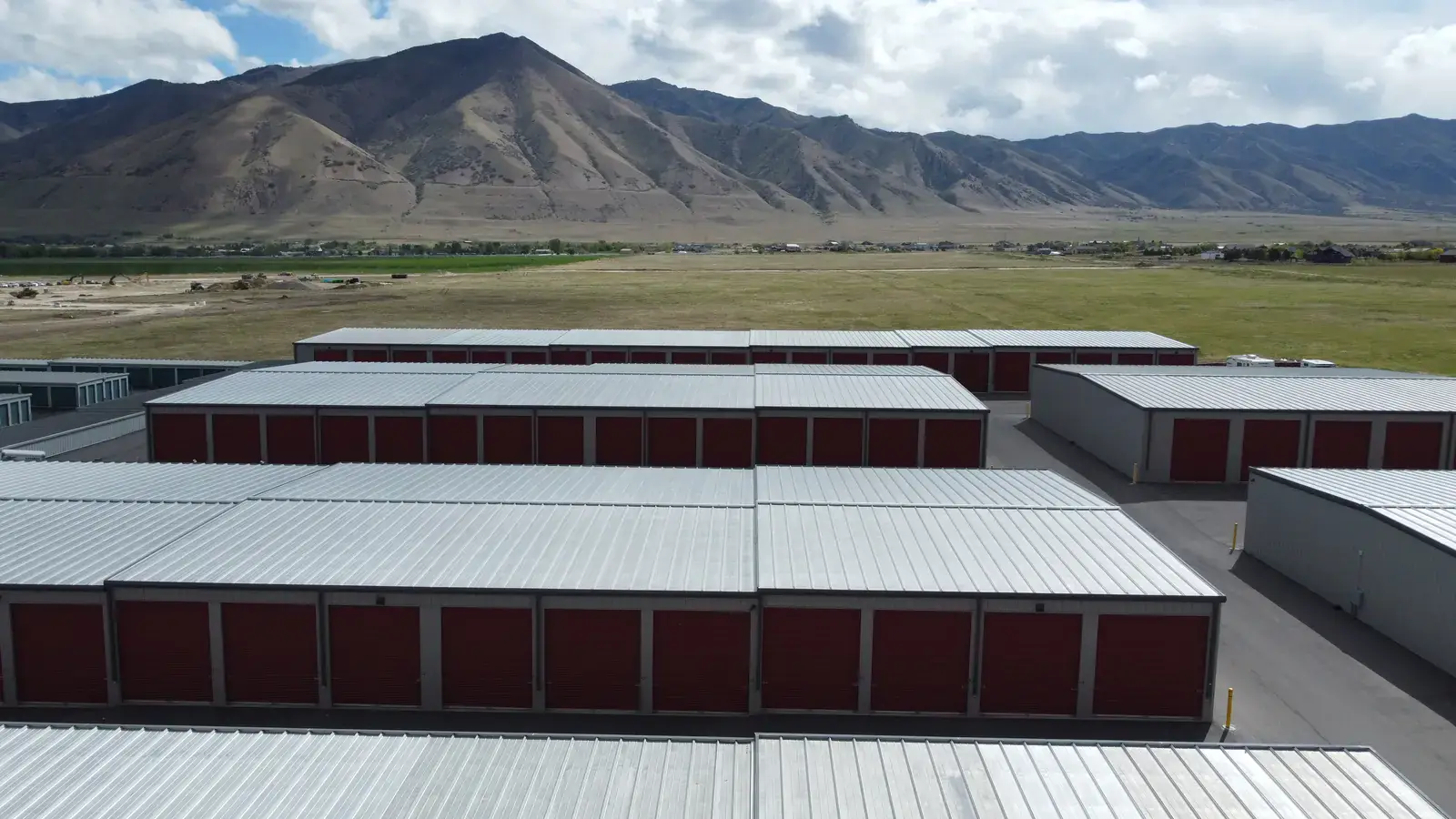
My Storage Erda
A steel self-storage facility in Erda, Utah, designed and built by Wasatch Structures. Single-story drive-up metal buildings framed by the Stansbury and Oquirrh ranges, engineered and erected for the Tooele Valley under one design-build self-storage construction contract.
View project→