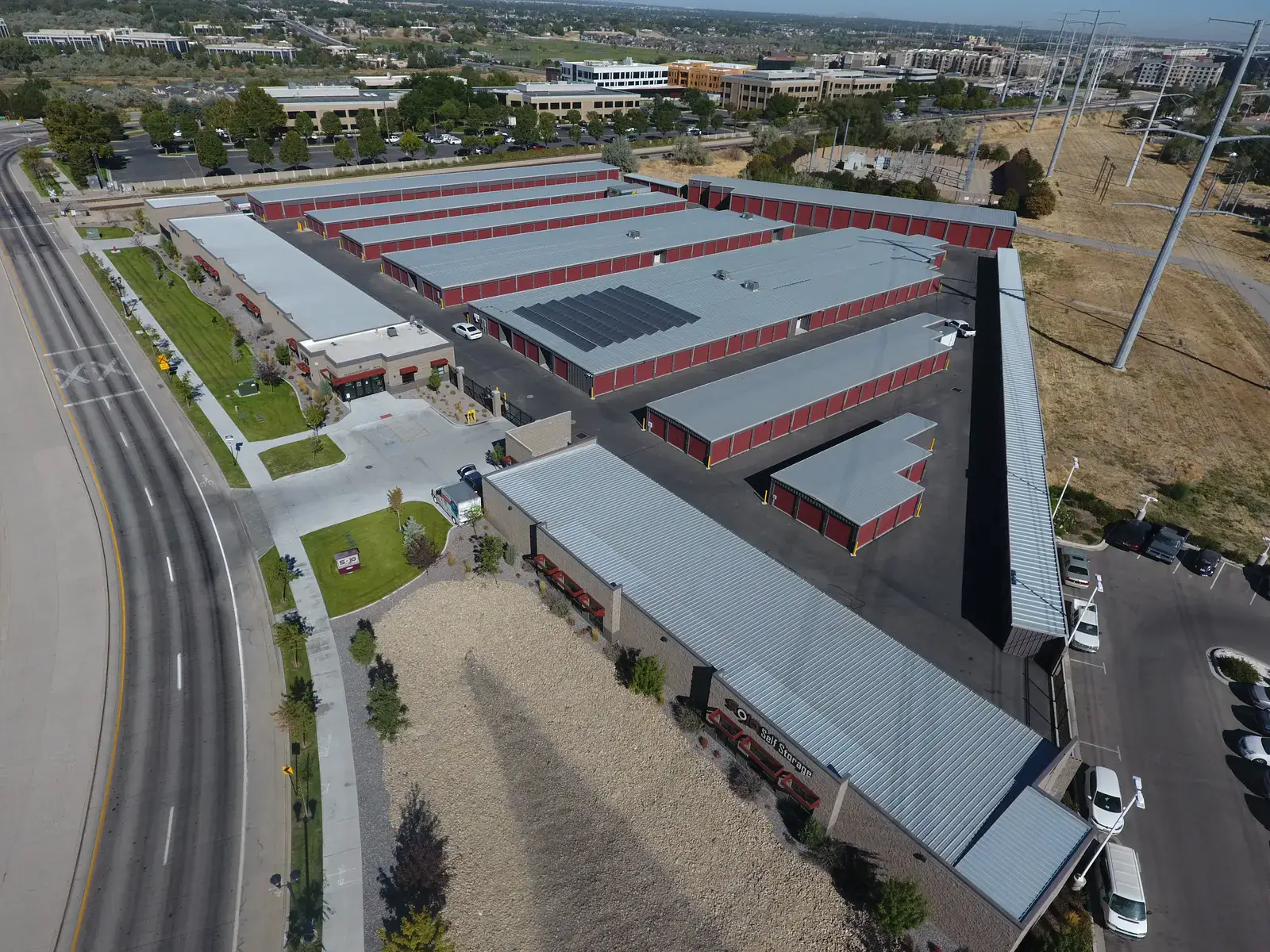
Single-Story Storage
Drive-up facilities. Lowest cost per rentable square foot, simplest operations, fastest path to revenue.
The workhorse format
Single-story drive-up self-storage is the workhorse of the industry. Lower cost per rentable square foot, simpler operations, faster build, and proven demand in nearly every market segment. When land economics support it, single-story usually wins.
We design for the dollar-per-NRSF target your pro forma requires. Building geometry, drive aisle widths, and unit modules tuned to your specific site and market.
One team handles design, engineering, fabrication, and construction. One contract, one schedule, one number you can hold us to.
Lowest Build Cost
Single-story drive-up typically runs $30 to $55 per rentable square foot, the most efficient cost basis in self-storage.
Tenant-Friendly Access
Drive-up units mean tenants pull right up, load directly, and leave. No carts, no elevators, no hallways.
Simple Operations
No HVAC zones, no elevators, no interior corridors to maintain. Lower opex over the asset life.
Phaseable Builds
Single-story facilities expand naturally. Add bays as demand absorbs supply, without re-engineering the original structure.
Site-Adaptive
Building strings can be configured to fit irregular parcels and maximize NRSF on the available land.
Faster to Revenue
6 to 9 months typical from groundbreaking to certificate of occupancy on a clean site.
Questions
Shell and doors typically run $30 to $55 per rentable square foot in the Mountain West. With site work, utilities, soft costs, and FF&E layered on, all-in cost most often lands between $70 and $110 per rentable square foot. A 10,000 RSF facility usually runs $700,000 to $1.4 million all in; a 50,000 RSF facility runs $3.5 to $7 million.
6 to 9 months from groundbreaking to certificate of occupancy on a clean site. Permitting and pre-construction add another 3 to 6 months. Pre-engineered steel components are fabricated in parallel with site work, which keeps the schedule predictable.
When land cost gets high enough that you cannot get the rentable square footage you need on a single-story footprint. Multi-story produces 80,000+ rentable square feet per acre, so it usually flips into the better answer above roughly $10 per square foot of land, provided the trade area has enough demand to absorb the larger build.
Yes. Single-story drive-up facilities expand by adding bays or new building strings as demand absorbs supply, without re-engineering the original structure. Plan the site civil and utilities for the full build-out rather than just phase one, so the second phase does not require trenching back through finished pavement.
Roll-up doors run roughly $400 to $900 each installed, depending on size, wind rating, and operator type. Smaller average unit size means more doors per square foot, which raises the per-rentable cost. Comparing facilities on per-door pricing is misleading; anchor to per-rentable-square-foot all-in.
A 100 psf snow-load building uses substantially more steel than a 30 psf one. Wasatch Front lower elevations typically design to 30 to 40 psf. Wasatch Back, Park City, and Eastern Idaho mountain markets typically design to 80 to 120 psf, with build cost 10 to 20 percent over the Wasatch Front baseline for the same building.
Self-Storage projects
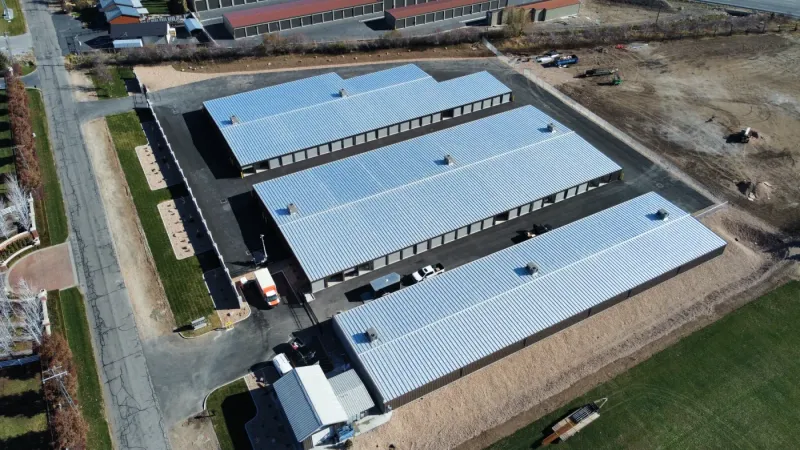
My Storage Charleston
Purpose-built self-storage in a high-demand Charleston corridor. 18-wheeler accessibility, on-site truck rentals, oversized doors, and a diverse unit mix designed for customers in transition, not just where they store.
View project→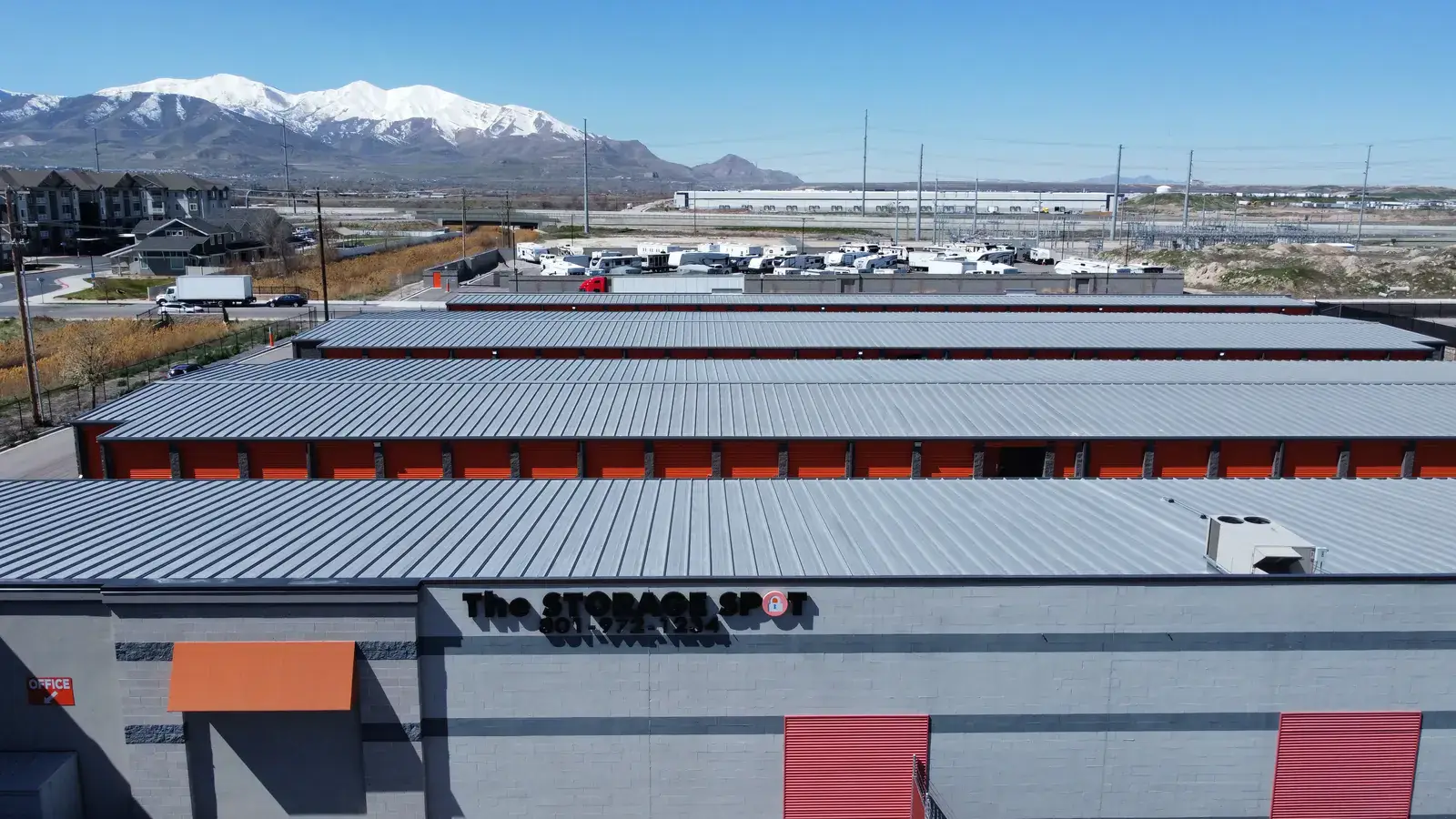
The Storage Spot
A large-format steel self-storage facility in West Valley City, Utah, designed and built by Wasatch Structures. Multi-building drive-up and climate-controlled metal buildings with boat and RV parking, engineered and erected for a dense Salt Lake Valley market under one design-build self-storage construction contract.
View project→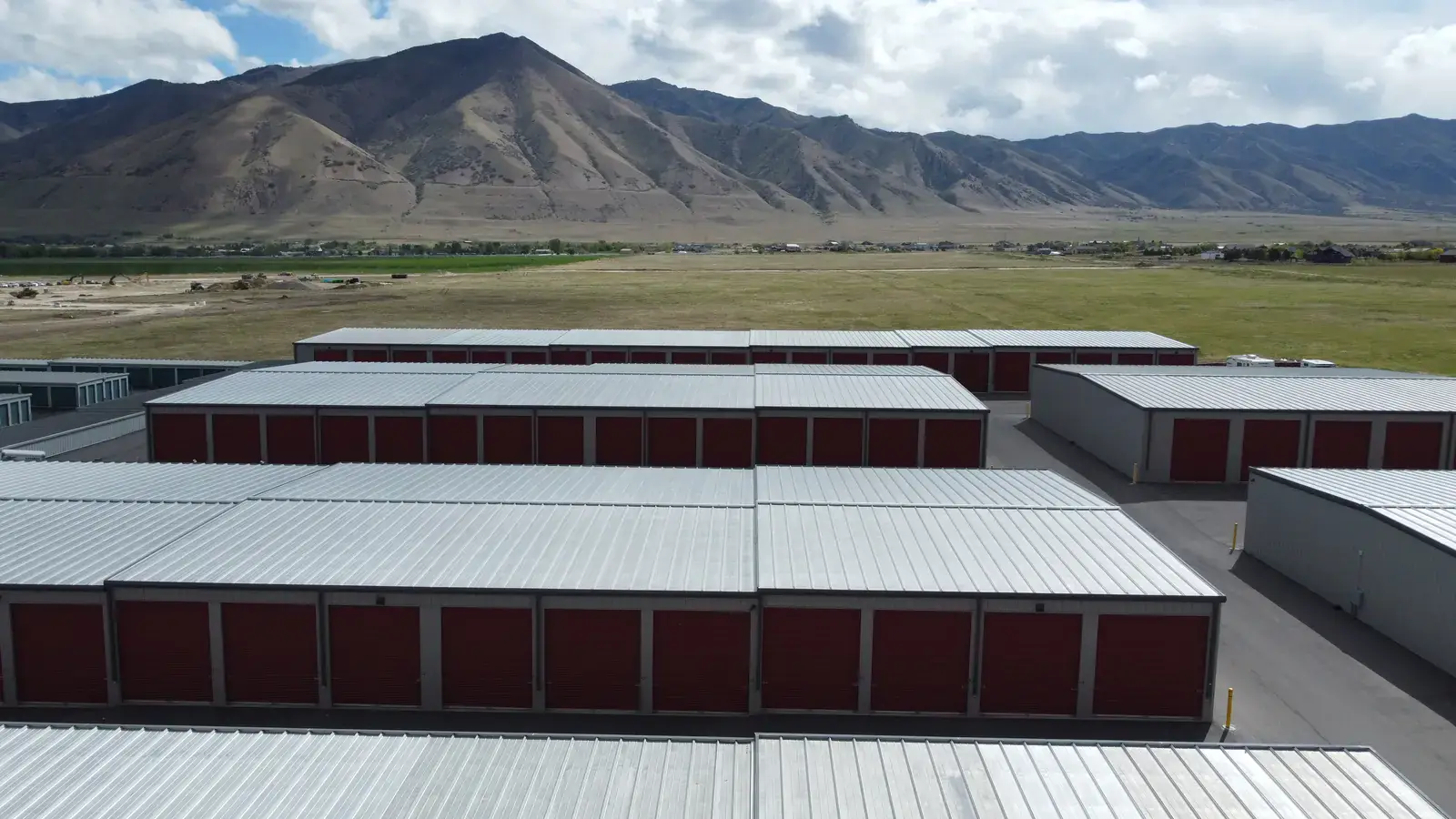
My Storage Erda
A steel self-storage facility in Erda, Utah, designed and built by Wasatch Structures. Single-story drive-up metal buildings framed by the Stansbury and Oquirrh ranges, engineered and erected for the Tooele Valley under one design-build self-storage construction contract.
View project→