Designed and built
by operators
A design-build contractor for self-storage facilities, boat and RV storage, pre-engineered metal buildings, and commercial steel. Founded in 2014 by Mike Johnson and headquartered in Bluffdale, Utah.
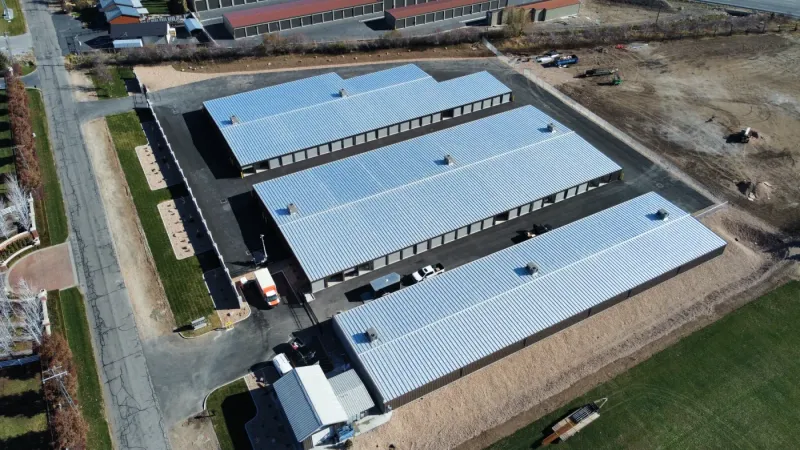
The design-build metal building partner.
Wasatch Structures designs, engineers, and erects self-storage facilities, boat and RV storage, pre-engineered metal buildings, and commercial steel. Single-story drive-up, multi-story interior corridor, climate-controlled, canopy and enclosed boat-and-RV, PEMB warehouses, retail shells, mixed-use, and complete self-storage building kits.
The work is design-build, end to end. One team handles the steel system design, stamped construction documents, fabrication, doors, panels, trim, foundations, sitework coordination, and erection. One contract, one schedule, one number on the bid. The same estimator who prices the job quotes the change orders. The same project manager who runs the schedule walks the punch list.
Wasatch is operator-led. Mike runs estimating personally, every job, and the company sees a deal from the owner-operator’s chair before it sees it from a contractor’s. That shapes how the building gets designed: hallway widths sized to the unit mix the trade area will actually rent, eave heights matched to the rigs the boat-and-RV tenants actually drive, climate-controlled wings sized to the demand premium the local market will pay.
Mike
Johnson
Mike started in 1995 with a summer job at Syndicated Storage erecting metal buildings. By 1996, he was running his own team. In 1998, he founded Johnson Construction, which still erects over one million square feet of storage buildings a year. In 2006, he moved into development and built his first self-storage facility. In 2014, he founded Wasatch Structures to handle the metal-building design and engineering side of the work.
That trajectory built into a complete vertical view of storage: a metal-building company designing the systems, a construction company putting them up, a management company running the operations, and his own development work taking projects from raw land to stabilized asset. Mike sees a deal from every chair on the table.
Buildings may look similar from the outside. The difference is who stands behind it.
Like a lot of first-time developers, Mike learned by doing. No blueprint, no mentor, no one to call for answers. That experience shaped how he runs Wasatch today: give other storage owners the information he never had. Real numbers, real lessons, real construction knowledge, freely shared.
Between Wasatch Structures, Johnson Construction, and his development and management work, Mike has been around the industry long enough that lenders, civil engineers, architects, and management companies know him by name. When a project starts, the supporting team is a phone call away.
Leon
Green
Leon spent years on the supply side of mini-storage construction before joining Wasatch. He sold doors and hardware into hundreds of facilities, which gave him a vantage point few builders have: watching storage get built one job at a time and seeing which design choices paid off over the life of the asset. Before that, he ran sales, training, and P&L across a range of industries.
He runs sales at Wasatch now. He’s the first call new owners take, and he stays with the project from the first conversation through the signed contract. Owners hear from one person the whole way.
Years inside hundreds of storage facilities on the supply side. Leon brings that perspective to every first call.
Leon covers ground from feasibility through specifications. What a lender will underwrite, how unit mix absorbs in the trade area, which structural choices and door schedules move the pro forma. The depth shows up in every project conversation.
Chris
Walker
Chris brings more than 25 years in self-storage and metal buildings to Wasatch, working alongside Mike since the early days. His career was built from the ground up: field operations, project coordination, material management, and procurement. He has seen self-storage facilities get designed and built from nearly every seat on the job.
That range shapes how he buys. Chris reads a building system the way the field will, so procurement decisions account for scheduling, installation sequencing, and supplier coordination, not just unit price. He keeps the order calendar lined up with the budget and the timeline the owner signed.
Twenty-five years buying steel, doors, and materials for storage. Chris knows what a lead time means before it ever hits the schedule.
As Procurement Director, Chris runs vendor relationships and material procurement across Wasatch’s national work, keeping projects moving from planning through construction. The industry knowledge, the attention to detail, and the loyalty trace back to the values the company was built on: practical know-how, accountability, and delivering the job the right way.
Built nationwide, anchored in the Mountain West.
Bluffdale headquarters keeps Wasatch in the middle of the strongest self-storage growth region in the country. The Wasatch Front is the home market, and most completed projects sit between Salt Lake City, Provo, Logan, and southern Idaho. Active work runs across Utah, Idaho, Arizona, Nevada, Colorado, Wyoming, and Montana.
Pre-engineered building kits ship anywhere in the continental United States, with stamped engineering tuned to the jurisdiction the building is going up in. Owners who want the kit and erect with their own crew get the same design package and technical support as a full design-build project.
One contract, one number, one team.
Traditional construction splits the work across an architect, a structural engineer, a general contractor, and a steel supplier. Four firms, four contracts, four hand-offs, and four invoices. Cost surprises live in the gaps between them.
Design-build collapses that. Wasatch carries the steel system design, the stamped construction documents, fabrication, and erection under one roof. The number on the bid is the number that gets built. Schedule milestones are committed in the contract, not promised in a meeting. When a scope question comes up mid-project, the answer comes from one company, not a coordination call.
Questions
Design-build means one team and one contract carry the project from the first sketch to the finished building. Wasatch designs the steel system, produces the stamped construction documents, fabricates the building, and erects it. There is no hand-off between a separate architect, engineer, steel supplier, and general contractor, and no gap between them for cost surprises to hide in.
Design-bid-build splits a project across a separate architect, structural engineer, general contractor, and steel supplier, each with its own contract and a hand-off in between. Design-build puts all of it under one team and one contract. At Wasatch the same company designs the steel system, stamps the drawings, fabricates the building, and erects it, so an owner gets one number, one schedule, and one point of accountability instead of coordination gaps and finger-pointing.
Wasatch Structures was founded in 2014 by Mike Johnson, who started erecting metal buildings in 1995, founded Johnson Construction in 1998, and moved into self-storage development in 2006. Counting that history, the team has been putting up steel for roughly three decades. The company is operator-led, so it sees a project from the owner-operator chair, not just the contractor chair.
Self-storage facilities (single-story drive-up, multi-story interior corridor, and climate-controlled), boat and RV storage, pre-engineered metal buildings, self-storage building kits, and commercial steel buildings. All of it is design-build, from concept through certificate of occupancy.
Headquartered in Bluffdale, Utah, with completed projects across Utah and Idaho and active work throughout the Mountain West, including Arizona, Nevada, Colorado, Wyoming, and Montana. Pre-engineered self-storage and metal building kits ship anywhere in the continental United States.
The team
Estimators, drafters, project managers, procurement, and field crews handle the job from first quote to final walkthrough. Every stage stays in one company. One accountability path, one phone number.
Estimating
Line-items the bid, prices the steel package, and calls out the cost drivers a developer needs to see before signing. The same estimator quotes the change orders later, so the math stays consistent end to end.
Drafting
Turns approved scope into stamped construction documents. Engineered to the specific snow, wind, seismic, and live loads of the jurisdiction, with drawings ready for permit submission.
Project management
Owns the schedule. Runs weekly site meetings, tracks the procurement and fabrication calendar against the field calendar, and stays in front of long-lead items: doors, roll-ups, HVAC.
Procurement
Places steel orders, manages fabrication windows, coordinates trucking, and stages deliveries to keep the field productive. Steel and door lead times move with the market; commitments get locked early.
Field crews
Erect the building. Concrete, sitework, MEP, and finishes get coordinated through trusted subs, with a Wasatch superintendent on-site to check the work against the drawings.